

Tending the Digital Ecology: Co-Designing a Community-Grown Agri-Social Future
Supporting the living system rhythms of Ireland's GrowDome initiative - where grassroots growers, environmental data, and community events interconnect in a regenerative agri-social network
As a team, we were tasked with developing a digital substrate to support the living system rhythms of Ireland's GrowDome initiative, where grassroots growers, environmental data, and community events interconnect in a regenerative agri-social network. Rooted in real needs and designed for scalable learning and community care, we built a socio-technical system to support local food resilience, community learning, and the rhythms of hydroponic growing - years ahead of the agri-tech hype.

Born from the tensions between ecological sustainability and technology's growing presence in our everyday lives, this project aimed to create the supports for the operational needs of the GrowDome network; a series of geodesic domes dedicated to hydroponic crop production and hubs for community-weaving. In the face of increasing climate uncertainty and fragmented food systems, GrowDome represented a reimagining of agricultural and community infrastructure for the future, one that combines community care, technological development, and mutual growth.
Project Details
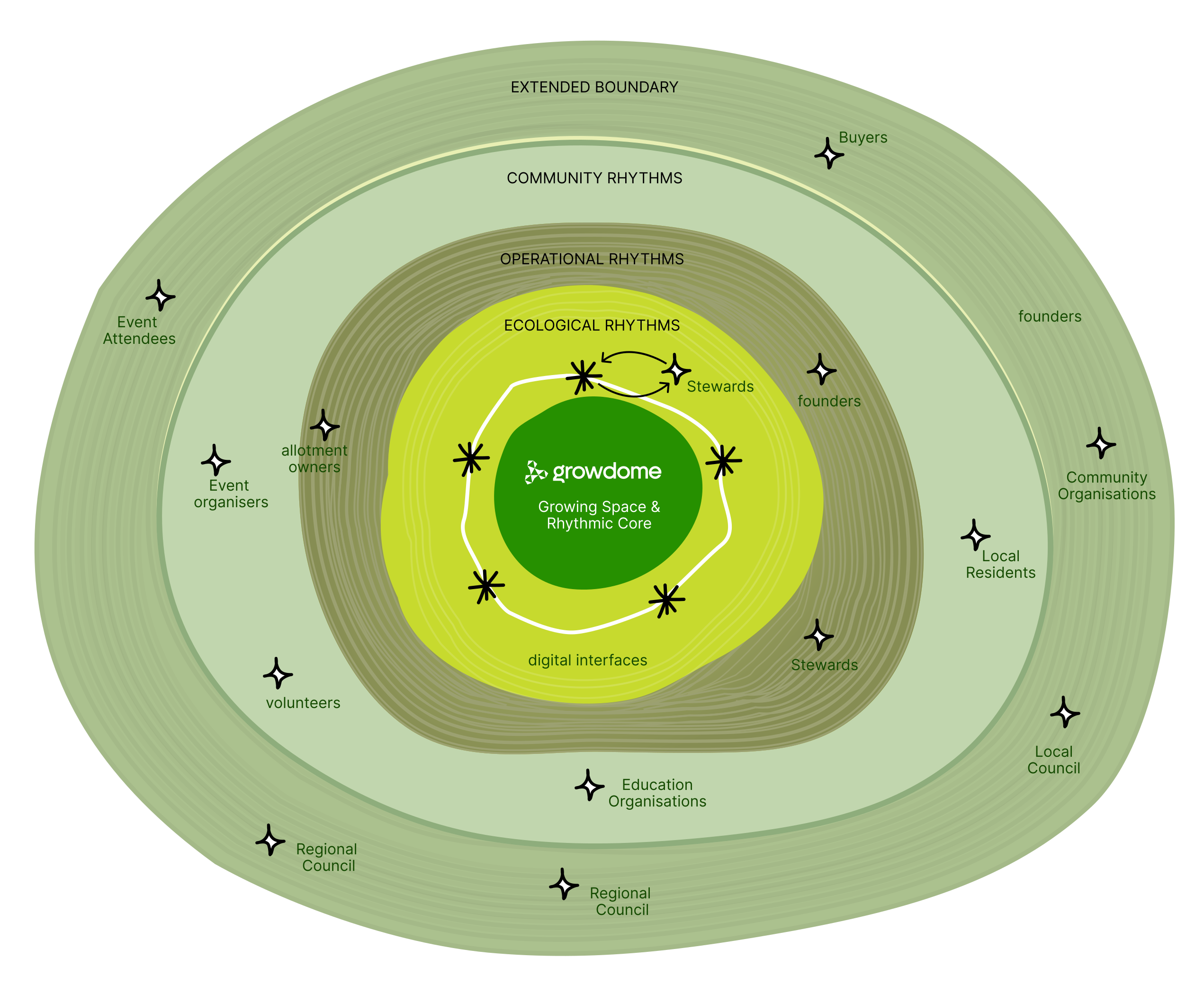
Ecosystem map
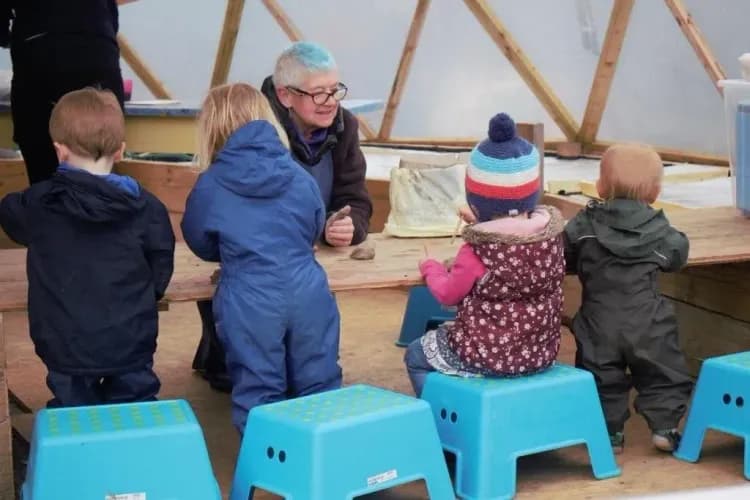
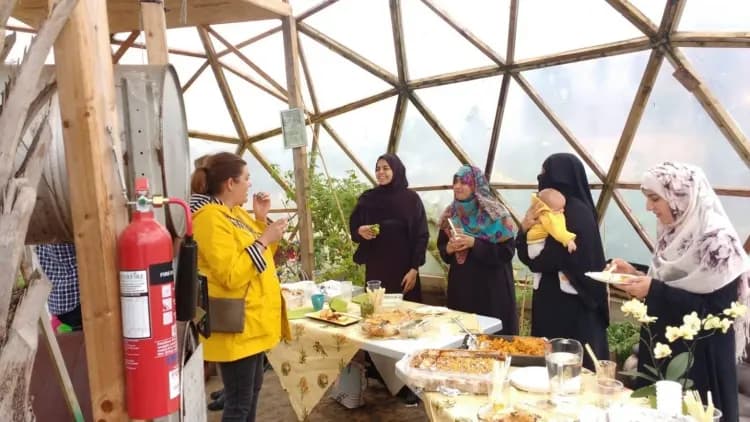
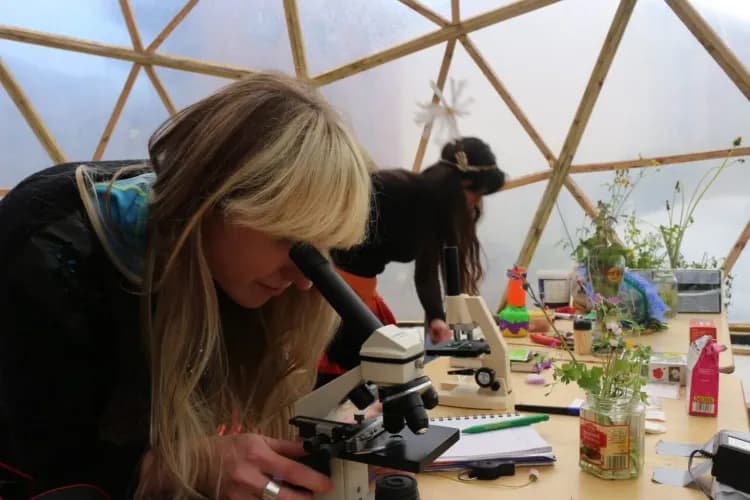
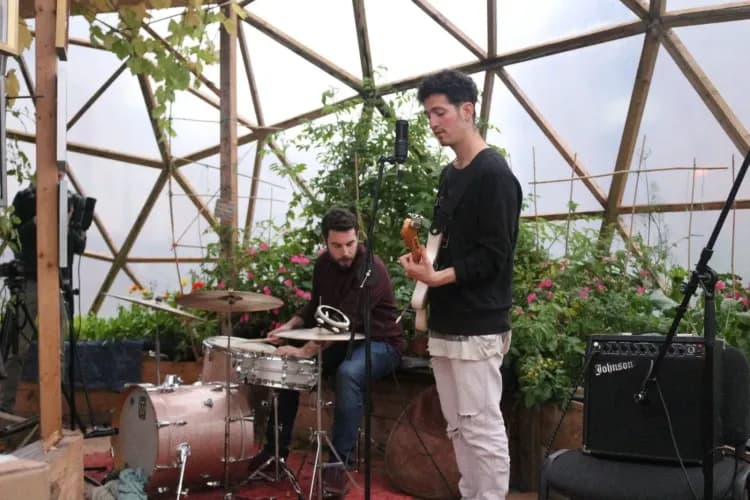
"This was infrastructure work. We were building for emergence and creating the minimum digital scaffolding for new kind of agri-social commons. The dome and its surroundings was a place for collective imaginary where community could gather, converse, imagine, explore and celebrate together.
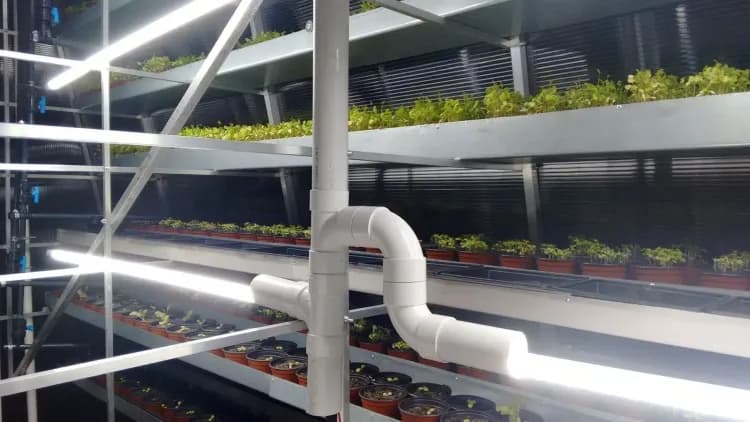
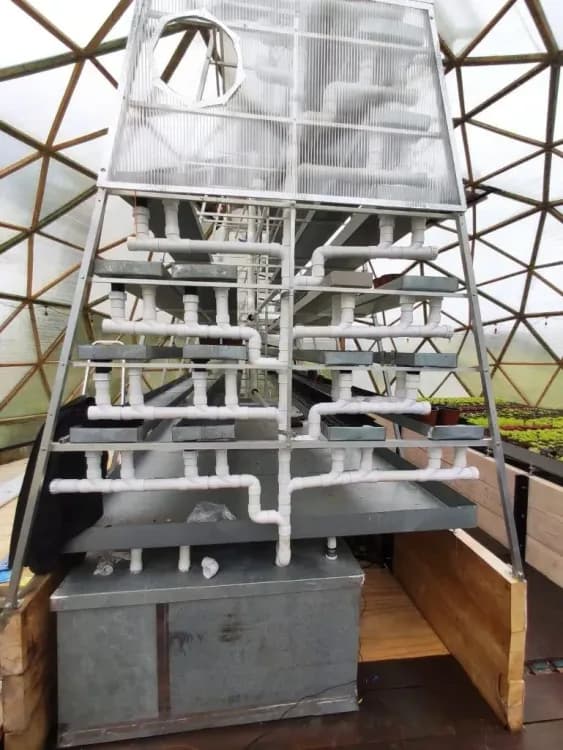
The design of the GrowDome platform emerged not purely from best practices, but from what was needed to hold the pieces together: data, plants, roles, learning, coordination. It also had to make sense to people.
The Challenge / Opportunity
How can we develop a practical "alternative sustainable collaborative system" (ASCs) that tackles multiple interconnected challenges simultaneously? Such a system would need to play a part in helping to secure our food future while regenerating abandoned and underproductive lands. The approach should contribute to climate stability, drive economic growth, and alleviate poverty - all through collaborative, inclusive, and equitable methods.
The central challenge was not simply to "design a digital solution," but to uncover how a community-led, ecologically embedded space—the GrowDome—could become, not only a sustainable business (a social enterprise), but also a local resource - for food production, collective learning, and social connection. Part 'social farm', part 'social innovation', part 'social enterprise' - this meant supporting:
- the natural rhythms of plant cycles,
- the technical rhythms of crop production and scheduling, and
- the relational practices / 'social technologies' unfolding in each dome with dialogue, learning, participation, shared care, community weaving and futures visioning.
"The project was a question: How do we build something durable, digital, and useful at the confluence of a garden, a classroom, and a network? The GrowDome isn't just a structure - its a space for learning, conversations, growing food, relationships, and community initiatives. Our challenge is to find a minimal digital shape that could support this emerging pattern across multiple domes.
Toward Balance: Aligning Ecology, Operations, and Society
An eco-social-technological effort works best when environmental care, daily operations, and social impact are valued equally. At times, one area may need more attention than the others, depending on the situation. But the long-term aim is balance; ecological health, effective operations, and human well-being support each other rather than one dominating at the expense of others.
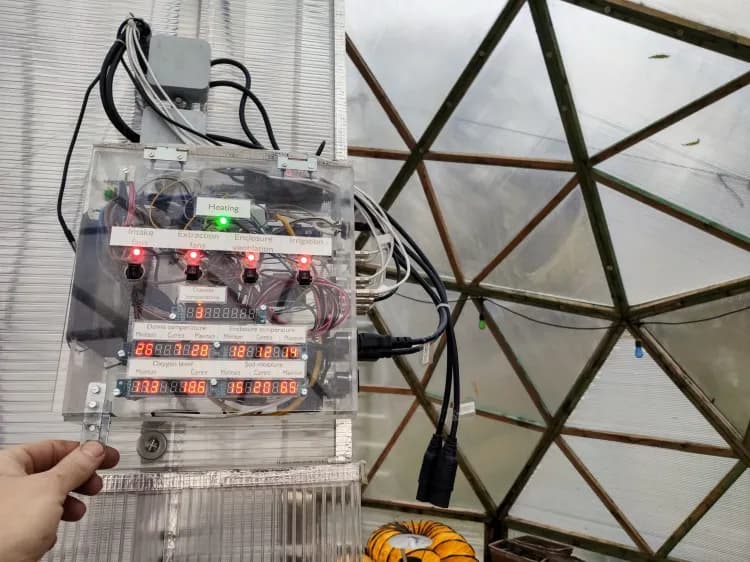
Digital technology was identified not as an overlay of control, but as a quiet infrastructure for growth of agency, autonomy and the network. What we were helping to build was a tool to support a community as they navigated the complex interplay between food, people, place, data and sustainable income.
The broader opportunity - in keeping with the prerogatives of institutional actors - was to uncover and prototype a scalable, values-aligned model that could replicate across Ireland, linking a constellation of local domes acting as nodes in a decentralised, living agri-social network.
Tensegrity as Design Principle
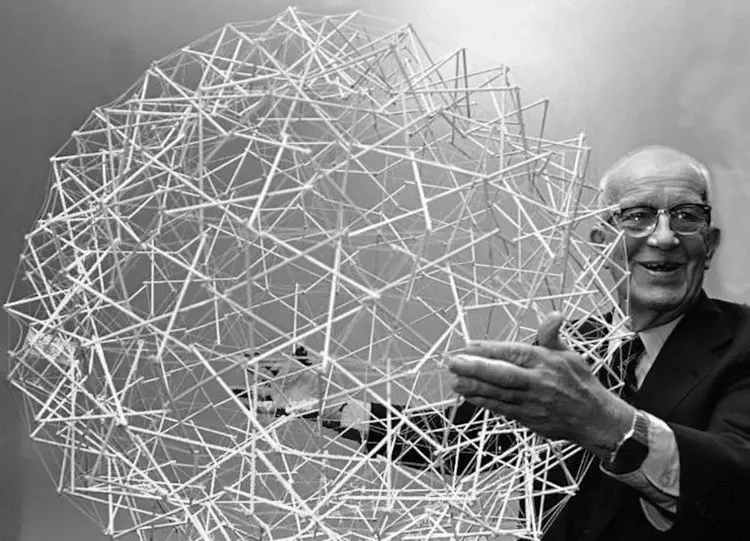
The GrowDome's geodesic structure became our design metaphor. Buckminster Fuller's concept of tensegrity—the balance between tension and compression that creates strength with minimal material—guided our approach to building both technical systems and community relationships.
Just as Fuller's geodesic domes achieved structural integrity through distributed forces, we aimed to create a lightweight but resilient framework that could support robust technical infrastructure while nurturing collaborative learning between people, nature, and technology.
"This is about more than designing a system to grow crops. We are tending the soil of relationships, learning, and scaffolding spaces where community can root, speak, and thrive.
Research & Discovery: Understanding the Living System
Our starting point was ethnographic immersion. The team spent time in the initial GrowDome space—observing planting cycles, attending community events, and sitting in conversation with growers, volunteers, and community members. This wasn't user research in the traditional sense. We were learning to read a living system.
What emerged was a complex web of interdependencies. The domes weren't just production facilities—they were spaces where multiple rhythms overlapped:
- Ecological rhythms: Plant growth cycles, seasonal changes, environmental conditions requiring constant monitoring
- Operational rhythms: Harvest schedules, crop rotation, resource allocation, maintenance needs
- Community rhythms: Events, learning workshops, volunteer coordination, relationship-building
The challenge wasn't to optimize any single rhythm but to create infrastructure that could hold space for all three without flattening their complexity.
Participatory Design as Method
We approached this work through participatory design workshops with GrowDome staff, volunteers, and community stakeholders. These sessions weren't about gathering requirements—they were spaces for collective sense-making about what the network needed to become.
Key tensions surfaced early:
The efficiency vs. emergence tension: Institutional partners wanted scalable, replicable models. Community members valued adaptability and local autonomy. How could we build infrastructure that supported both?
The digital divide tension: Not all community members had equal access to technology or digital literacy. How could we build tools that enhanced rather than excluded?
The knowledge authority tension: Who decides what counts as legitimate knowledge in an agricultural system? Scientific data? Grower experience? Community wisdom?
These weren't tensions to be resolved but design constraints to be honored. The system would need to be flexible enough to hold multiple forms of knowing and organizing.